
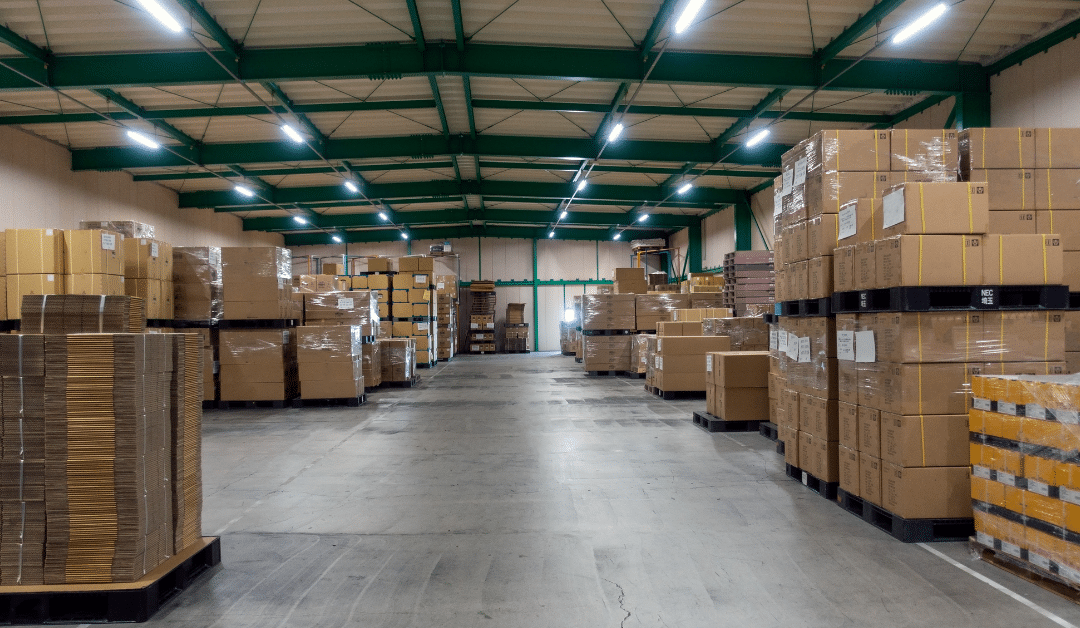
Fresh food distribution depends on much more than getting products from one location to another. Between farms, food processors, retailers, restaurants, and consumers is an interconnected network of transportation providers and warehouses working to keep products moving efficiently. For perishable foods, these facilities must also maintain the environmental conditions necessary to preserve quality throughout the journey.
Lineage provides a useful example of the important role temperature-controlled warehousing plays within this system. The company operates a global network of cold storage facilities that support frozen, refrigerated, and other temperature-sensitive products. Its network also connects warehousing with transportation and other supply chain services, demonstrating how storage facilities function as active points within food distribution rather than simply places where inventory sits.
Understanding the role of warehousing helps explain how modern food supply chains manage inventory, respond to changing demand, reduce unnecessary delays, and maintain product quality from origin to destination.
Warehousing Is a Critical Link in Food Distribution
Warehouses have traditionally been associated with storage, but modern food warehousing involves considerably more. Facilities receive incoming shipments, organize inventory, maintain appropriate storage conditions, prepare outgoing orders, and coordinate with transportation providers.
For fresh and refrigerated food, these responsibilities become especially important because products have limited shelf lives.
A pallet of shelf-stable goods may be able to remain in storage for an extended period with little change in quality. Fresh fruits, vegetables, dairy products, meat, seafood, and other temperature-sensitive foods require considerably more attention.
Companies such as Lineage operate temperature-controlled environments designed for different product needs. These types of facilities help maintain product integrity while inventory waits for the next stage of distribution.
The warehouse therefore becomes an important connection point between production and transportation.
Temperature Control Helps Preserve Freshness
Temperature management is one of the foundations of fresh food logistics.
After agricultural products are harvested or refrigerated foods are produced, proper temperatures help slow deterioration and maintain product quality. That controlled environment must continue as products move between transportation and storage.
Cold storage warehouses are designed to provide consistent environments for refrigerated and frozen products. Depending on the facility and commodity, different areas may be maintained at different temperatures to accommodate varying product requirements.
Lineage describes its cold storage network as including frozen, refrigerated, and multi-zone environments, illustrating how warehouses can accommodate products with different temperature needs.
Maintaining appropriate conditions throughout storage helps protect the investment already made in harvesting, processing, packaging, and transporting food.
The Warehouse as Part of the Cold Chain
The cold chain is the temperature-controlled system that protects perishable food throughout its journey.
It can begin shortly after harvest or production and continue through refrigerated transportation, warehousing, distribution, and final delivery. A weakness at any stage can affect everything that came before it.
A refrigerated truck can maintain ideal conditions during transportation, but that work is less valuable if products are then stored improperly. Similarly, an efficiently managed cold storage facility depends on reliable refrigerated transportation to maintain conditions once products leave the warehouse.
The scale of companies like Lineage demonstrates why warehousing and transportation should be viewed as connected parts of one system. The company’s services combine temperature-controlled storage with transportation and other logistics capabilities intended to support movement through the food supply chain.
That connection is particularly important when products travel long distances or move through multiple facilities before reaching consumers.
Strategic Warehouse Locations Matter
Where a warehouse is located can have a major effect on supply chain performance.
Facilities positioned near agricultural regions, production centers, ports, major highways, population centers, or retail markets can help businesses position inventory closer to where it will eventually be needed.
Reducing the distance between inventory and customers may simplify transportation planning and make businesses more responsive to changing demand.
Lineage says its warehousing network includes facilities positioned near ports, production hubs, population centers, and other important distribution points. Its current facility directory also shows different types of facilities, including regional distribution centers, public warehouses, port locations, and automated warehouses.
Location strategy is not limited to large global networks. Businesses of different sizes can benefit from considering how warehouse locations affect transportation distances, delivery schedules, inventory availability, and customer service.
Warehouses Help Balance Supply and Demand
Fresh food demand does not always match production schedules perfectly.
Agricultural harvests can create large quantities of product within relatively short periods. Retail demand can increase around holidays, promotions, weather events, or seasonal changes. Food manufacturers may also experience periods of increased production.
Warehousing provides an important buffer between supply and demand.
Rather than requiring every product to travel immediately from production to its final customer, businesses can position inventory strategically and release it into the distribution network as needed.
Lineage highlights flexible storage capacity as one way its facilities respond to harvest periods, promotions, and business growth. The company has also described using multiple facilities to accommodate a frozen produce customer’s unusually large harvest.
This flexibility demonstrates why storage capacity is an important consideration when businesses plan for seasonal fluctuations.
Inventory Management Keeps Products Moving
Effective warehousing requires businesses to know what products are available, where they are located, and when they need to move.
Inventory management systems help warehouse teams track incoming products, organize storage locations, prepare orders, and coordinate outbound shipments. Accurate inventory information also helps businesses avoid unnecessary shortages or excess stock.
For perishable products, inventory rotation becomes especially important. Food cannot simply remain in storage indefinitely. Warehouse operations must account for shelf life, customer requirements, shipment schedules, and other product-specific considerations.
The goal is not to keep inventory inside a warehouse as long as possible. The goal is to store it effectively until the right time for its next movement through the supply chain.
Warehousing Can Support Food Safety
Fresh food distribution requires careful attention to sanitation, product handling, and storage conditions.
Temperature monitoring helps maintain appropriate environments, while facility procedures help reduce contamination risks and protect product integrity. Warehouses may also need to maintain records that provide visibility into product movement and storage.
Lineage identifies food safety and regulatory readiness as components of its cold storage operations, alongside temperature control and inventory protection.
These responsibilities illustrate why food warehousing requires specialized operational knowledge.
A warehouse handling temperature-sensitive products must do more than provide available square footage. It needs processes designed around the characteristics of the inventory being stored.
Warehousing and Transportation Must Work Together
Even the most advanced warehouse cannot complete the food distribution process by itself.
Products eventually need to leave storage and travel toward another distribution center, retailer, restaurant, food manufacturer, or other destination. Transportation therefore needs to coordinate closely with warehouse operations.
Appointments must be scheduled. Products need to be prepared for pickup. Trailers must arrive at the appropriate time. Loading needs to occur efficiently, and drivers need accurate information about their destination and shipment requirements.
Lineage describes connected warehousing and transportation as part of its broader approach to food distribution. Its recent material on modern distribution notes that food companies may simultaneously serve retailers, foodservice distributors, direct-to-consumer channels, and international markets, each with different requirements.
Coordination between storage and transportation becomes increasingly valuable as these networks become more complicated.
Efficient Loading Helps Protect Fresh Products
Warehouse efficiency also affects what happens at the loading dock.
Long loading delays can create transportation problems and may be especially concerning when products require strict temperature management. Organized warehouses can prepare freight before trucks arrive, helping reduce unnecessary waiting.
Proper pallet configuration and loading practices also protect products during transportation.
Fresh fruits and vegetables can be susceptible to bruising, crushing, or packaging damage. Loads should therefore be organized carefully to reduce movement during transit while allowing any necessary airflow within refrigerated trailers.
The transition between warehouse and truck may represent only a small portion of the overall journey, but it can have a significant influence on shipment quality.
Technology Is Changing Food Warehousing
Technology continues to transform how warehouses store and manage food.
Warehouse management systems provide greater visibility into inventory. Automated storage and retrieval equipment can help facilities use space more efficiently. Temperature monitoring systems provide continuous information about environmental conditions.
Automation is also becoming increasingly important in large-scale cold storage.
Lineage, for example, uses automated storage and retrieval systems in some facilities and describes proprietary software and technology as part of its warehouse operations.
Technology does not eliminate the need for experienced logistics professionals. Instead, it provides teams with additional information and tools that can improve accuracy, visibility, and operational efficiency.
Warehousing Supports Multiple Distribution Channels
Today’s food products can reach consumers through many different paths.
Traditional grocery stores remain important, but restaurants, foodservice companies, convenience stores, ecommerce businesses, wholesalers, and direct-to-consumer services have created additional distribution channels.
Each may require different quantities, delivery schedules, packaging configurations, and transportation arrangements.
Warehouses provide a central location where inventory can be organized for these different destinations.
A large inbound shipment might ultimately be separated into multiple outbound orders destined for several customers. In other situations, products from multiple suppliers may be consolidated before traveling toward a common destination.
This ability to organize inventory makes warehousing an active component of distribution rather than a passive storage function.
Cold Storage Helps Support Year-Round Availability
Modern consumers have become accustomed to finding a broad variety of foods throughout the year.
Achieving that availability requires a complex combination of domestic production, imports, refrigerated transportation, cold storage, and distribution planning.
Lineage describes its network as supporting a variety of products, including fresh produce, frozen foods, seafood, dairy, and protein. Its cold chain materials also illustrate how warehouses connect food processing facilities with distribution centers, retailers, restaurants, and consumers.
Warehousing helps create the flexibility necessary to move products through these networks while responding to changes in supply and customer demand.

Reducing Food Waste Through Better Logistics
Food waste can occur at many stages of the supply chain.
Temperature problems, damaged packaging, poor inventory management, transportation delays, and inaccurate demand planning can all contribute to product loss.
Warehousing cannot eliminate every source of waste, but effective storage and inventory management can reduce several important risks.
Maintaining proper temperatures helps preserve product quality. Accurate inventory information can support better rotation. Strategic warehouse locations may reduce transportation complexity. Efficient loading can limit unnecessary delays.
Lineage publicly identifies reducing food waste as part of its broader purpose and describes technology, cold storage, and integrated logistics as tools for improving food supply chain performance.
For the wider logistics industry, reducing avoidable product loss benefits businesses while also making better use of the resources required to grow, manufacture, transport, and store food.
Scalability Matters During Changing Demand
Food supply chains rarely remain completely consistent throughout the year.
Harvest seasons can suddenly increase storage requirements. Promotions may increase retail demand. New customers can create additional distribution volume. A growing business may need warehouse capacity in regions it previously did not serve.
Scalable warehousing gives businesses additional flexibility when these changes occur.
Rather than designing a supply chain only around average demand, companies can consider how their logistics partners will respond when inventory rises or distribution requirements change.
This is another area where large networks such as Lineage demonstrate an important logistics principle: storage capacity needs to support both routine operations and periods of changing demand.
The same principle applies to transportation. Additional inventory eventually requires additional movement, making coordination between warehouse capacity and transportation capacity essential.
The Importance of Visibility
Businesses need to understand what is happening with their inventory throughout the supply chain.
Knowing that a shipment reached a warehouse is only the beginning. Customers may also need information about quantities, storage locations, outbound orders, shipment status, and delivery timing.
Visibility helps businesses make better decisions.
If inventory levels are changing faster than expected, purchasing can be adjusted. If customer demand increases, additional shipments can be scheduled. If transportation is delayed, warehouses and customers can prepare accordingly.
Modern warehousing technology makes this information increasingly accessible, allowing storage facilities to become a source of useful supply chain data rather than simply a physical location for inventory.
What Businesses Can Learn From Large Cold Storage Networks
The size of a warehouse network may vary dramatically from one logistics operation to another, but many of the principles behind successful warehousing remain the same.
Businesses need appropriate storage conditions, accurate inventory information, efficient handling, dependable transportation connections, strategic locations, and the flexibility to respond when demand changes.
Large cold storage networks show how these individual elements can work together across complicated food supply chains.
Lineage currently describes itself as a worldwide cold storage and logistics provider with hundreds of strategically located facilities and integrated transportation solutions.
For businesses evaluating their own logistics strategies, the important lesson is not necessarily to create the largest possible network. It is to build a system in which storage, transportation, inventory management, and distribution support one another.
How Warehousing Fits Into a Complete Logistics Strategy
Warehousing works best when it is planned as part of the entire supply chain.
Businesses should consider where products originate, how long they need to remain in storage, what conditions they require, where customers are located, how frequently orders are placed, and how quickly shipments need to arrive.
Transportation requirements should be considered at the same time.
CF Logistics, for example, offers transportation, warehousing, and distribution services, including warehouse facilities in Toughkenamon and Blandon, Pennsylvania. Its distribution services also include LTL and cross-docking options.
Connecting these different functions can help businesses create logistics strategies based on the complete movement of inventory rather than treating each step independently.
The Foundation of Modern Food Distribution
Warehousing is one of the foundations of modern fresh food distribution. It provides the controlled environment, inventory organization, handling capabilities, and distribution coordination necessary to keep perishable products moving between production and consumers.
Cold storage facilities are especially important because fresh and frozen products depend on carefully managed conditions throughout their journeys. Strategic locations can position inventory closer to customers, while technology can improve visibility and inventory accuracy. Transportation then connects these warehouses with the next destination in the supply chain.
Companies such as Lineage demonstrate the scale and complexity that modern temperature-controlled warehousing can reach. More importantly, their operations illustrate a fundamental principle of food logistics: storage and transportation work best when they function as connected parts of the same distribution strategy.
For businesses moving fresh and temperature-sensitive products, creating that connection can help protect quality, reduce unnecessary delays, respond to changing demand, and build a more efficient supply chain.
Stay up to date with the latest at CF Logistics LLC by connecting with us on Instagram, Facebook, and LinkedIn.